Friends, families & communities
Family reunion photos from every generation's perspective
By the Afters team · Updated · 5 min read
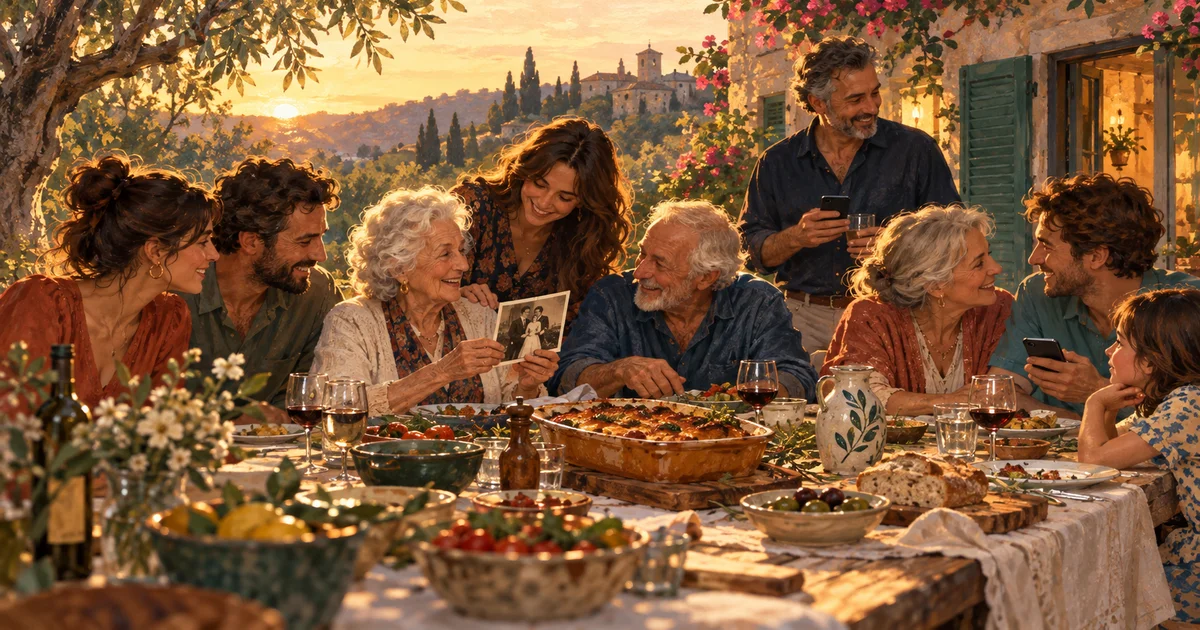
I went to the reunion expecting the usual family picture: everybody outside, somebody calling for the missing cousin, and an argument about whether the first attempt was good enough. We took that photograph. I am glad we did. It was not the moment I kept thinking about on the way home.
That was my aunt in the kitchen, telling a younger cousin how our grandmother used to make the dish on the table. I had eaten it all my life. I had never heard the story. For a few minutes, the kitchen felt full of people who were not even there.
The short version
- Make room for the family stories that happen outside the group portrait.
- Offer patient help with joining, without making the camera compulsory.
- Keep the family's wishes about photographs ahead of the album.
Everybody had arrived with a different family in mind
To me, the house meant childhood visits. To my cousin, who had come from another country, it was a place she knew mostly through other people's stories. An older relative remembered it before the extension. We were sitting in the same room, but the room meant something different to each of us.
That is what I would want a shared reunion roll to hold. Not one definitive account of who we are, but the things different people notice. The serving dish, the tree outside, the person who always gets up to make more tea. Someone else's photograph might help me see a familiar place for the first time.
The invitation would need a little patience
I can imagine my aunt asking whether she has done it correctly, then insisting she does not want to hold anyone up. I would sit beside her rather than reach for her phone. Most of the time, people do not need somebody to take over. They need permission to ask a question without feeling behind.
Afters allows eligible guests to join and capture in a browser after phone verification. I would explain the SMS and camera permission, show it on my own device, and keep a written link beside the QR. A relative who does not want to join can still be part of an agreed photograph. Belonging to the reunion should never depend on understanding the camera.
I would ask for a picture with a story attached
My cousin might photograph the dish because she had just learned who used to make it. I might photograph the person washing up, because it had taken me years to notice how often she disappeared into the kitchen while we stayed at the table. Neither picture would look like a formal family milestone.
They would still matter. I would ask people what they wanted to remember, rather than give everybody the same assignment. Some would want faces. Some would want the garden or a recipe written in a familiar hand. The album could hold more than the people confident enough to stand at its center.
Not every family memory belongs everywhere
There are things I am happy for my family to see that I would not put in a public post. A tired face after a long journey. A child asleep on a shoulder. A private moment that looks ordinary until you know the story behind it. The people in those pictures deserve a say in where they go.
I would talk about that before we started, and follow parents' wishes about children's photographs. Members can save developed photos, and a deliberately shared photo link can be forwarded. Hiding something from my own view does not remove everybody else's copy. The sharing guide explains the controls; the kindness has to come from us.
Later, I would want the names and the small explanations
I imagine looking back at the roll months later and finding a comment beneath the kitchen picture: That was the dish she always made when we came home. A short sentence can keep a photograph from becoming a pleasant scene with its meaning missing. It can let a story travel to a relative who was too young to know it.
I would save the photographs that matter most, even though current rolls do not automatically expire. Another reunion could have another roll. The family would change, as families do. I would like to keep the table as we saw it this time, from more than just my own chair.
Questions people ask
Can relatives join without downloading an app?
Yes. Eligible guests can verify their number, join and take photos in a browser. Offer patient help with camera permission and the connection, without making anyone feel they have to participate.
Can family who were not there automatically see the reunion roll?
Not automatically. Roll access depends on membership and the joining rules. A deliberately shared developed-photo link can show a particular item, so talk about the family's wishes before sending it on.
Does hiding a family photo remove it for everyone?
No. Personal hiding changes your view. If a picture needs attention for the group, use the relevant host or reporting controls rather than assuming everyone has stopped seeing it.
Keep reading
Private event photo sharing: who can see what in Afters?
Feel comfortable in the picture by understanding who can see it and where it can travel.
How a shared disposable camera works: from first shot to reveal
Take a few pictures, come back to the party, and open the memory together afterward.
Your life in shared rolls: a personal photo history made together
Some people stay. Some evenings do not repeat. Both can have a place in your memories.