For event planners
A wedding planner's runbook for guest photos
By the Afters team · Updated · 5 min read
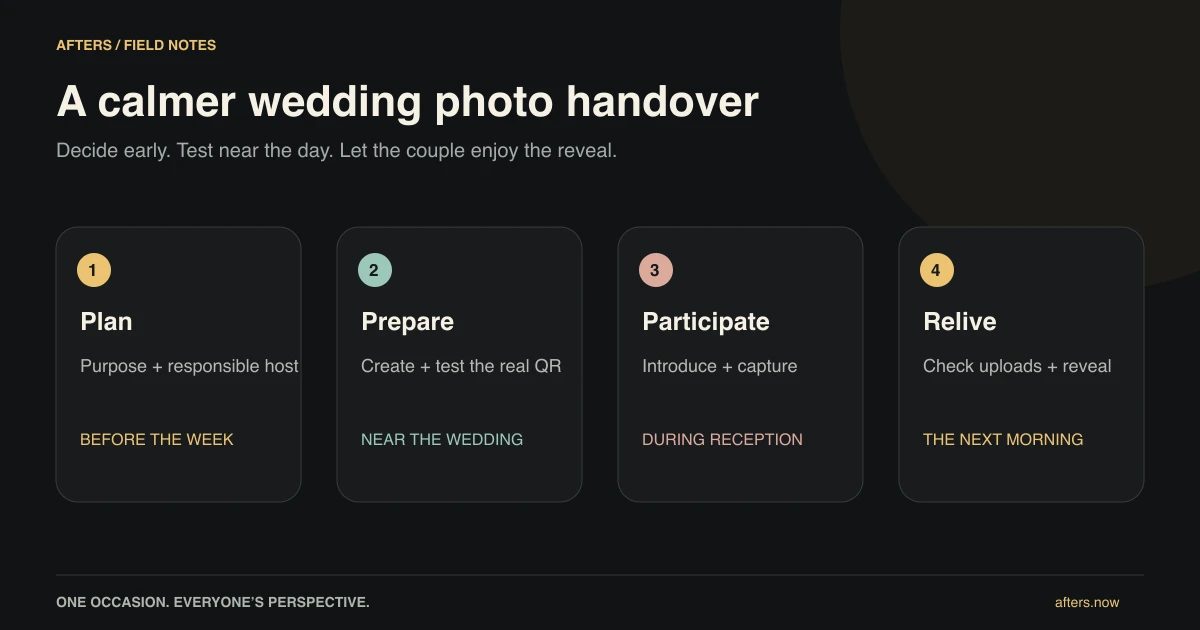
A good wedding planner knows how much care can disappear into an easy-looking day. The water that arrives before anyone asks. The relative who finds the right seat. The small problem the couple never needs to hear about. Guest photos deserve that same quiet attention.
The aim is not to add another activity to a full wedding. It is to leave the couple with something lovely afterward: the day seen from the tables they could not sit at and the conversations they could not join. A little planning can let the camera feel almost effortless to everyone else.
The short version
- Ask what the couple hopes to remember before choosing the setup.
- Give the roll a named host, rather than a responsibility everyone assumes is handled.
- Leave the couple with an album they know how to find and enjoy.
Start with what they would love to see afterward
Ask a couple what they hope their guests will photograph and the conversation may become surprisingly personal. Perhaps one wants more pictures of an older relative. Perhaps they are bringing two friendship groups together for the first time. Perhaps they simply want to see their guests having a good time while they are occupied elsewhere.
Let that answer shape the invitation. A shared roll should complement professional coverage, not ask guests to duplicate a shot list. Agree the ceremony's phone-free moments with the photographer and officiant. Then choose who will create the Afters roll and look after it. Good boundaries help the informal part feel relaxed.
Keep the practical work out of the couple's wedding morning
Prepare the words and card design early, then create and test the actual roll near the wedding. Current Afters close and development schedules run within roughly three days of setup, so the final invitation is a near-event job. A beautiful placeholder is not yet a working guest camera.
Test the real link from another device, including phone verification, camera permission and a capture. Print the confirmed QR with a readable written link. Check it where guests will actually use it, not just on a bright office desk. Finishing these ordinary little jobs is what lets the couple forget about them and stay present.
Give helpers words that sound like a welcome
The room does not need an announcement full of features. It needs to understand why the couple would love a few photographs from everyone else's side of the day. Explain that guests can use the browser after verifying their number, and that the shared roll opens after development rather than appearing live.
Brief the MC and a willing helper with the same simple explanation. Our announcement guide offers adaptable wording. Let guests know when to expect the reveal and who can help. A warm introduction can turn an unexplained code beside a place setting into a small invitation to contribute something meaningful.
Show it once, then give the evening back
At a natural pause, let someone demonstrate the camera. After that, notice quietly whether people understand. If a guest is stuck on permission or expects the sealed roll to show full photos, a gentle explanation may be all they need. More announcements are not always more helpful.
Keep joining and being photographed optional. The host can review and hide inappropriate shots before reveal; the couple should not have to spend the reception monitoring the roll. If moderation or support is part of your own service, agree that clearly. If it is not, give it a named home rather than leaving it to whoever happens to notice.
Make the morning after feel like a gift, not a loose end
Before an early reveal, check whether guests are still trying to finish queued native uploads; development ends that opportunity. Then make sure the couple knows where the album is and how to save favorites. You are handing over a memory, not merely a completed setup task.
A brief follow-up can ask whether the reveal felt right and whether they found a picture they especially loved. Keep any request to use their images for your own promotion separate. The best result is simple: the couple gets to see their wedding through other eyes, and nobody has to start chasing files while the flowers are still in the room.
Questions people ask
When should a planner create the actual wedding roll?
Plan the words and responsibilities early, then create the actual roll near the wedding. Current schedules run within roughly three days of setup. Test the real invitation before printing its QR.
Who should own the guest-photo roll?
Choose a responsible host with the couple. They should know the schedule and how to preview and moderate. A clear handover is better than passing a personal login among suppliers.
What belongs in the MC briefing?
Give guests the reason to join, then explain the link or QR, phone verification, limited shots and reveal time. Mention browser photos and keep the invitation optional.
Keep reading
Wake up to your wedding through your guests' eyes
The next morning, find the little pieces of your wedding you could not be there to see.
The DJ or MC's guide to getting a shared camera roll started
A few warm words can turn a QR code into an invitation to remember the night together.
Wedding photo QR codes: table cards that guests actually scan
Placement, wording and print sizes that turn a table card into a working guest camera — plus what to avoid.