For photographers
After the photographer leaves: a shared camera for the rest of the wedding
By the Afters team · Updated · 5 min read
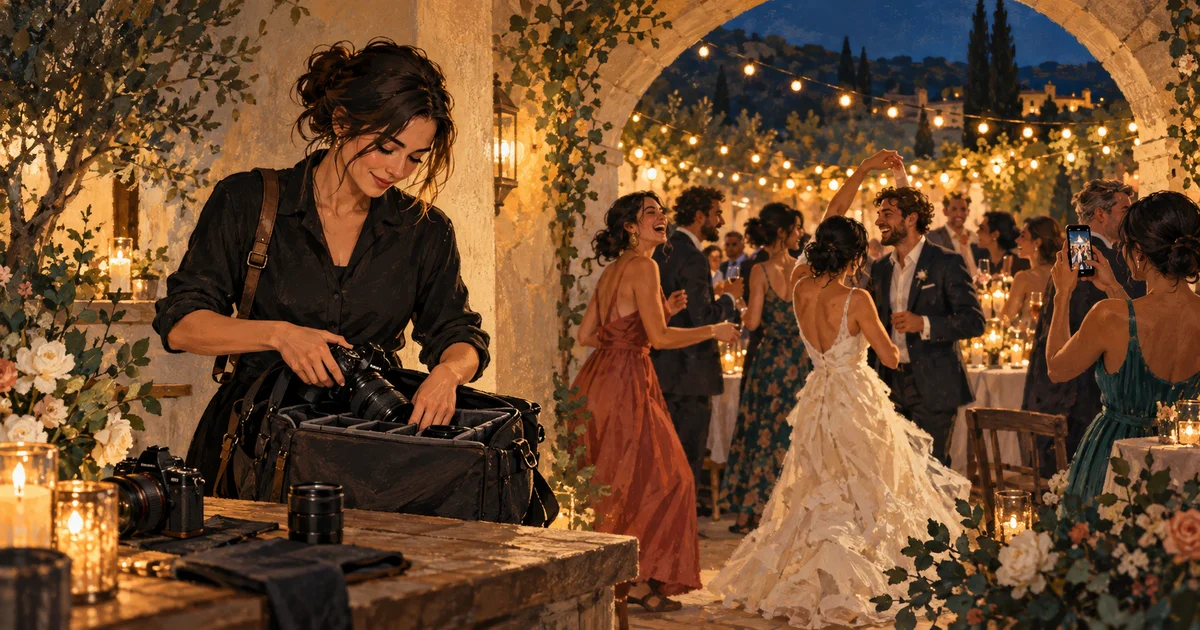
I was packing my camera when the bride's friend came over to ask whether I had caught a moment near the bar. I hadn't. I had been photographing something else, something important, on the other side of the room. She began describing it and laughed before she reached the end.
That is one of the humbling things about photographing a wedding. You can work with all the attention you have and still know that the day is larger than your viewfinder. There is always another little story happening just beyond the frame.
The short version
- Professional photographs and guest pictures can matter for different reasons.
- Keep the ceremony and formal coverage free from conflicting photo instructions.
- Leave the shared roll with somebody who is staying, not with an assumption.
The pictures have different kinds of closeness
My work is deliberate: watching the light, anticipating a gesture, being ready for something that will happen once. A guest is close in another way. They know why a particular joke landed, who has not seen whom in years, or what it means for somebody to be dancing at all.
I would not want those viewpoints to compete. I would want the couple to receive both without mistaking one for a promise about the other. A shared camera cannot guarantee coverage after I leave, and it does not replace professional editing or contracted work. A friend's imperfect picture can still carry a kind of intimacy I would never think to manufacture.
Some moments need everyone to put the camera away
I have stood at the end of an aisle hoping the people beside it would watch the couple with their own eyes. A shared guest roll would not change that wish. An invitation to take photographs at the reception should not become an instruction to hold a phone through the ceremony.
I would agree that with the couple and officiant beforehand, then say clearly where the guest camera belongs. The informal time around dinner, the quieter tables, the later dancing: those can give it room. The guest-versus-professional guide explains the distinction. Nobody needs another assignment during a moment they came to witness.
I would not leave it in a message nobody has read
A busy reception is full of well-meant assumptions. Somebody has surely told the MC. Somebody knows when the photos open. Before leaving, I would find the person actually responsible and have the short conversation in person. I would rather do that than have the couple wondering what happened to their guest pictures.
The host should know the schedule and the preview and moderation controls. Guests join Afters by verifying their number and can capture photos in a browser; new rolls are sealed until development. The planner's runbook can help organize that handover, leaving me free to finish my work and the host ready to care for what follows.
My advice would be smaller than a photography lesson
I would point out a corner where faces catch the light. Suggest moving a little closer. Ask people to hold still for the group picture, then let them go back to moving. I would not want anyone feeling they had to produce a professional photograph before they were allowed to use a shot.
The frame I would be most curious to see might come much later: a friend sitting beside the couple after the room has thinned, or somebody carrying the last flowers out. Those pictures have permission to be imperfect. What matters is that someone inside the moment thought it worth keeping, and the people pictured were comfortable being there.
There is a point when I leave and their night goes on
I like that part of the job too: saying goodbye while there is still music. The wedding does not finish because my coverage does. The people who remain get to make the last part of the story without me arranging it, and I want the couple to enjoy that part as their own.
A guest roll can offer a way back into it the next morning. I would ask whether they loved what came back, not assume access to the roll made it material for my portfolio. Their memory comes first. Any permission to use a guest photograph in my own work would be a separate conversation.
Questions people ask
Can Afters replace extra professional after-party coverage?
It adds voluntary guest perspectives, not guaranteed coverage or professional editing. If a particular late-night moment must be covered, arrange the appropriate professional service.
Can I offer the guest-camera setup as part of my service?
You can coordinate the current shared-camera experience with a couple. Be clear about your own service and any commercial arrangement; do not promise a paid Afters white-label package or custom filters that are not supported.
Who moderates after the photographer leaves?
The person you agreed would host the roll. Make sure they know the preview, moderation and concern-handling process before your coverage finishes.
Keep reading
A wedding planner's runbook for guest photos
A little care behind the scenes can leave the couple free to enjoy what comes back.
Wake up to your wedding through your guests' eyes
The next morning, find the little pieces of your wedding you could not be there to see.
Guest photos vs professional photos: why they make each other better
The pro shoots the story; the guests shoot the chaos between the lines. A case for both, with the etiquette.